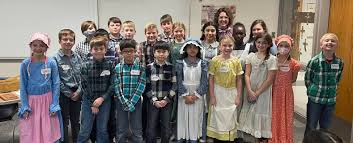
The fourth graders from St. Michael Catholic School spent the day exploring Heritage Village, a living‑history museum designed to show what life looked like more than a century ago. From the moment the buses pulled up beside the wooden fences, the students felt as if they had stepped into another era. The air carried the scent of wood smoke, and the buildings—weathered, simple, and full of character—stood quietly as if waiting to share their stories.
The class divided into small groups, each led by a guide dressed in period clothing. Group Three, made up of some of the most curious students, followed Mr. Thompson, a cheerful man in suspenders who seemed to know every detail about the village’s past. He led them first to the one‑room schoolhouse. Inside, the desks were narrow and carved from dark wood, and a single chalkboard hung at the front of the room. The students listened as Mr. Thompson explained how children once wrote on slates and sometimes walked miles to attend lessons. Several students exchanged wide‑eyed looks, imagining themselves trudging through snow just to practice arithmetic.
Next, the class visited the small white church at the center of the village. Sunlight streamed through tall windows, casting soft patterns across the wooden pews. Even the most talkative students fell quiet, sensing the peacefulness of the space. Their teacher, Mrs. Alvarez, pointed out how similar the church felt to their own school chapel—simple, calm, and full of meaning.
The blacksmith shop quickly became one of the most popular stops. Inside, the fire glowed bright orange, and the rhythmic clang of metal on anvil echoed through the room. The blacksmith demonstrated how he shaped a horseshoe, turning heavy iron into something useful with practiced ease. The students watched with fascination, whispering guesses about how hot the fire must be and how strong the blacksmith’s arms were.
Lunch took place on the grassy field beside the old barn. The students spread out blankets, shared snacks, and chased stray wrappers that blew across the grass. Laughter carried across the field, mixing with the distant sound of the blacksmith’s hammer. Several students announced that they wished recess could always take place in a place like this.
The final stop of the day was the general store. Shelves were lined with jars of old‑fashioned candy, wooden toys, and everyday items from long ago. Students browsed eagerly, comparing treasures and deciding how to spend the small amounts of money they had brought. Some chose candy sticks, others small toys, and a few selected keepsakes to bring home.
As the buses rolled back toward the city, the fourth graders settled into their seats, tired but content. The day had shown them more than old buildings and tools—it had given them a glimpse into the lives of the people who came before them. Their heritage, they realized, wasn’t just something in textbooks. It was alive in the stories, traditions, and places they had explored together.