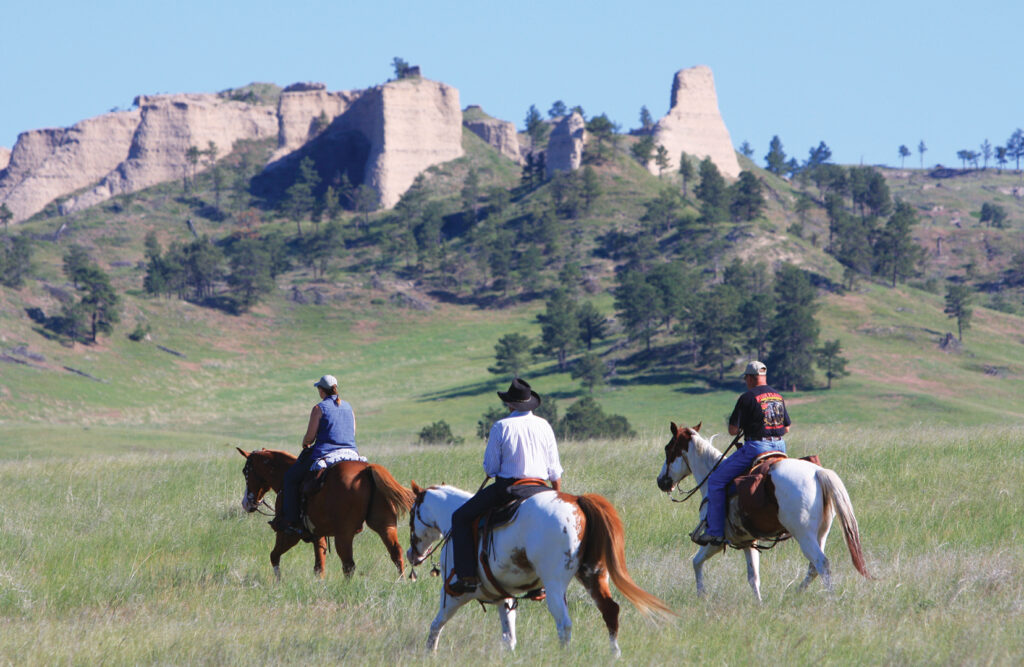
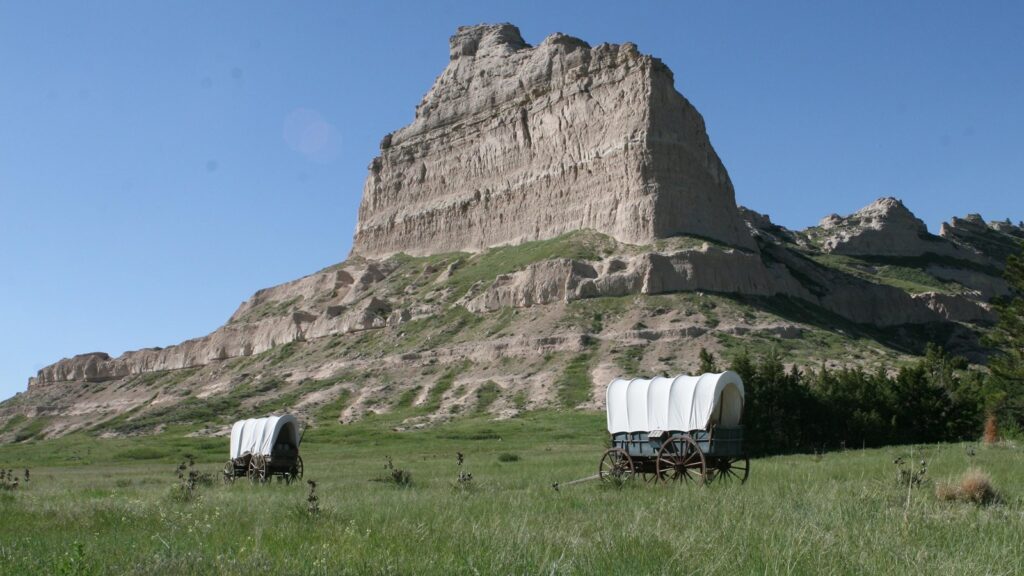
Scotts Bluff National Monument (Western Nebraska)
Scotts Bluff rises dramatically from the plains, a landmark that guided Indigenous peoples, fur traders, and thousands of emigrants along the Oregon, California, and Mormon Trails. The monument’s rugged bluffs and badlands create a landscape that feels almost cinematic. Visitors can drive the Summit Road—one of the few places in the National Park System where tunnels are carved through solid rock—or hike the Saddle Rock Trail for sweeping views of the North Platte River Valley. The onsite museum adds historical depth, showcasing the stories of those who passed through this region during westward expansion. It’s a place where natural beauty and American history intertwine.
Agate Fossil Beds National Monument (Near Harrison, NE)
If you’re fascinated by prehistoric life, Agate Fossil Beds is a must‑see. This national monument preserves one of the most significant Miocene fossil sites in the world. The area was once a watering hole for ancient mammals—tiny horses, massive entelodonts, and the bizarre “beardogs.” Today, visitors can walk the Fossil Hills Trail to see the excavation sites and learn how scientists uncovered these treasures. The visitor center also houses an extraordinary collection of Lakota artifacts gifted by Chief Red Cloud, making the monument a blend of paleontology and cultural history. The surrounding grasslands offer a peaceful, wide‑open backdrop that feels quintessentially Nebraskan.
Niobrara State Park (Northern Nebraska)
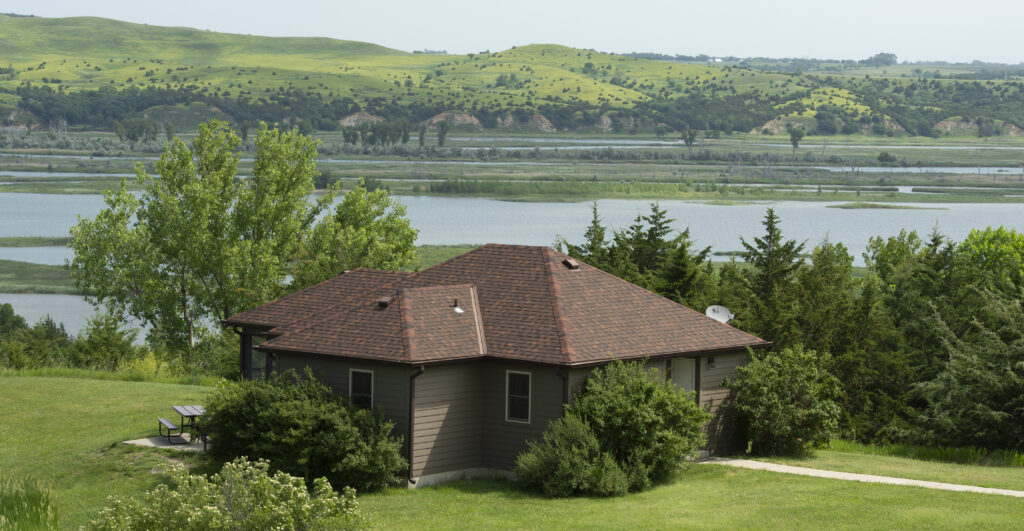
Perched above the confluence of the Niobrara and Missouri Rivers, Niobrara State Park is a haven for wildlife watchers and river lovers. The park’s rolling hills and wooded ravines offer miles of hiking and horseback trails, while the river below is popular for canoeing and kayaking. The park’s cabins—some with panoramic views—make it a great weekend getaway. In summer, visitors often spot deer, wild turkeys, and soaring eagles. The park also hosts interpretive programs that highlight the region’s ecology and Indigenous history. It’s a quieter, more contemplative park, perfect for travelers who want to unwind in nature.
Indian Cave State Park (Southeastern Nebraska)
Indian Cave State Park is named for its large sandstone cave featuring prehistoric petroglyphs. While the exact origins of the carvings remain a mystery, they add a sense of ancient wonder to the park. Beyond the cave, the park offers more than 20 miles of hiking trails through hardwood forests that blaze with color in the fall. The Missouri River borders the park, providing scenic overlooks and opportunities for fishing. Indian Cave is also known for its well‑preserved 19th‑century ghost town, St. Deroin, which hosts living‑history events. Whether you’re hiking, camping, or exploring the cave, the park feels like a blend of natural and cultural discovery.
Badlands National Park (South Dakota, near Nebraska border)
Though not inside Nebraska, Badlands National Park is close enough to be a realistic and rewarding addition to a Nebraska‑based trip. The park’s jagged cliffs, striped rock formations, and expansive prairies create one of the most striking landscapes in the Midwest. Visitors can drive the Badlands Loop Road for dramatic overlooks or hike trails like Notch Trail, which leads to a cliffside viewpoint via a wooden ladder. The park is also home to bison, bighorn sheep, and prairie dogs. Its night skies are famously dark, making it an excellent stargazing destination. If you’re already exploring northern Nebraska, the Badlands are well worth the detour.
Five Travel Tips for Visiting State and National Parks
1. Check Weather and Trail Conditions Before You Go
2. Bring More Water Than You Think You Need
3. Respect Wildlife and Keep a Safe Distance
4. Pack Layers and Sun Protection
5. Leave No Trace, and stay on trails