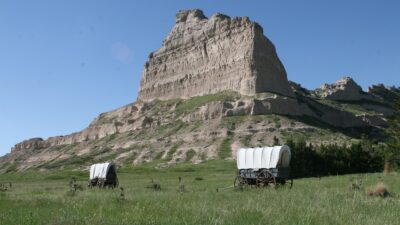
1. Scotts Bluff National Monument (Nebraska)
Scotts Bluff rises dramatically from the surrounding plains, creating one of the most iconic silhouettes in the state. For thousands of years, Indigenous peoples used the bluff as a landmark, and in the 19th century it became a crucial waypoint for travelers on the Oregon, California, and Mormon Trails. Today, you can drive the summit road or hike the Saddle Rock Trail, which winds through tunnels carved into the rock. The views from the top stretch for miles across the North Platte River Valley. The visitor center also offers excellent historical exhibits, including original trail artifacts and interpretive displays that bring the pioneer era to life.
2. Niobrara National Scenic River (Nebraska)
If you’re looking for a water‑based adventure, the Niobrara River is one of the Midwest’s most underrated gems. Designated as a National Scenic River, it flows through a unique ecological transition zone where six distinct ecosystems meet. That means you’ll see everything from ponderosa pines to tallgrass prairie to waterfalls cascading over sandstone cliffs. Canoeing, kayaking, and tubing are the most popular activities, and the gentle current makes it accessible even for beginners. Wildlife sightings are common—bald eagles, river otters, and bison herds from nearby preserves often make appearances. Several outfitters in Valentine can help you plan a day trip or a multi‑day float.
3. Chadron State Park (Nebraska)
As Nebraska’s oldest state park, Chadron State Park sits in the scenic Pine Ridge region, a landscape that feels worlds away from the flat plains many people associate with the state. Towering ponderosa pines, rugged buttes, and deep canyons define the area. The park offers miles of hiking and mountain biking trails, a small lake for fishing and paddle boating, and horseback riding opportunities. Cabins and campsites make it easy to stay overnight. Because of its elevation and forested terrain, the park stays cooler in summer than much of Nebraska, making it a great warm‑weather escape.
4. Agate Fossil Beds National Monument (Nebraska)
This park is a dream for anyone fascinated by paleontology or natural history. Agate Fossil Beds preserves one of the world’s most significant Miocene‑era fossil sites, where ancient mammals such as beardogs, small rhinoceroses, and early horses once roamed. The visitor center houses an impressive collection of fossils and Lakota cultural artifacts, including items gifted to rancher James Cook by Chief Red Cloud. Two trails lead to the historic dig sites, offering a chance to walk through the same hills where paleontologists uncovered these remarkable remains. The landscape is quiet, open, and subtly beautiful—perfect for slow exploration.
5. Badlands National Park (South Dakota, near Nebraska)
Just a short drive north of the Nebraska border, Badlands National Park is close enough to include in a Nebraska‑based itinerary. The park’s eroded buttes, striped rock formations, and expansive prairies create one of the most dramatic landscapes in the region. Sunrise and sunset light up the formations in shades of gold, pink, and red. The park is also home to bison, bighorn sheep, pronghorn, and prairie dogs. Hiking options range from easy boardwalk trails to more rugged routes where you can scramble over the formations. If you’re up for a longer adventure, the Badlands Loop Road offers spectacular overlooks and photo opportunities.
Five Travel Tips for Visiting State and National Parks
1. Prepare for Rapid Weather Changes
Nebraska and the surrounding Great Plains are known for unpredictable weather. A sunny morning can turn into a windy afternoon or a sudden thunderstorm. Pack layers, bring rain protection, and check the forecast before heading out. Even in summer, evenings can cool off quickly in higher‑elevation parks like Chadron.
2. Bring More Water Than You Think You Need
Many parks in and near Nebraska have limited water sources once you’re on the trail. The dry prairie air can dehydrate you faster than expected. A good rule of thumb is at least one gallon per person per day, especially if you’re hiking or spending long hours in the sun.
3. Respect Wildlife and Keep Your Distance
Bison, bighorn sheep, and other large animals may look calm, but they can be unpredictable. Always observe from a safe distance and never approach for photos. Even smaller animals like prairie dogs or raccoons can carry diseases or become aggressive if fed.
4. Plan Ahead for Limited Cell Service
Many parks—especially those in remote areas—have spotty or nonexistent cell coverage. Download maps ahead of time, carry a physical map if possible, and let someone know your itinerary. This is especially important for river trips on the Niobrara or backcountry hikes in the Badlands.
5. Support Local Communities and Leave No Trace
Small towns near parks rely on visitors for their economies. Buying supplies locally or grabbing a meal in town helps sustain these communities. While in the parks, follow Leave No Trace principles: pack out trash, stay on designated trails, and avoid disturbing natural or cultural features.